



























































Uncategorized
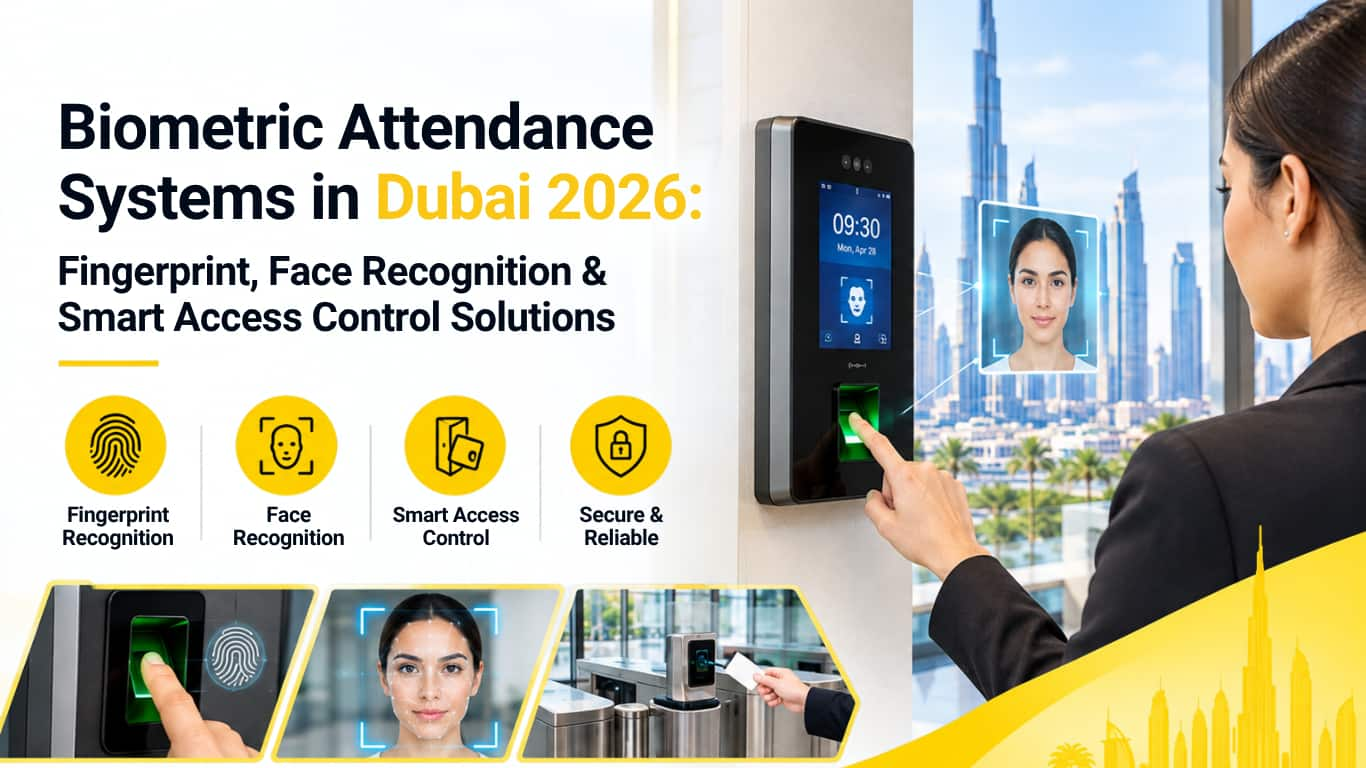
Biometric Attendance Systems in Dubai 2026: Fingerprint, Face Recognition & Smart Access Control Solutions
Sep
Handling employee attendance can be tough, especially with the expansion of a business. Manual attendance registers, access cards and PIN-based systems can also be misused, leading to inaccurate records or fraudulent attendance entries. The UAE and other GCC countries are shifting towards a digitized economy and biometric attendance systems in Dubai help businesses digitize their workforce attendance.
Biometric systems are extensively used in offices, retail outlets, warehouses and industrial units. Some systems provide time and attendance functionalities, while others integrate time and attendance with access control.
There are multiple factors that determine the cost of a biometric system. The factors can include the number of users, the environment in which the system is to be deployed, the type of authentication, the level of control required, and the software integrated with the system.
In this guide, we explain how biometric systems facilitate time and attendance as well as access control. We will cover how systems integrate fingerprint and facial recognition technologies. Lastly, we will look at what to consider when comparing biometric attendance solutions available in the UAE.
What Is a Biometric Attendance System?
A biometric attendance system is a digital employee time-tracking solution that uses a person’s unique physical characteristics to verify their identity. Instead of signing a register, entering a PIN or using someone else’s access card, an employee can check in using a fingerprint, face or another supported biometric method.
Once the identity is verified, the system records the attendance event. Depending on the machine and software, businesses can then manage working hours, shifts, late arrivals, overtime and attendance reports.
The basic process is simple:
Employee registration → Biometric verification → Check-in/check-out → Attendance record → Report
This makes biometric attendance different from conventional card-based systems because the attendance record is connected to the employee’s registered biometric profile.
For businesses that also need controlled entry, some machines can connect attendance with door access control.
Why Are Businesses in Dubai Using Biometric Attendance?

There are several benefits to switching to biometric attendance systems. For one, it eliminates the need for human resources (HR) teams to manage and verify employee attendance manually. Rather than rely on HR teams to manage and manually maintain attendance registers, or calculate employee work hours and overtime, management can automatically and instantly capture employee attendance using biometric machines.
This system is particularly beneficial for growing and/or expanding businesses.
Further, implementing biometric-based attendance systems helps curb the practice of proxy attendance, whereby an employee attends on behalf of another. Given that attendance in a biometric-based system is based on the individual employee’s fingerprint or facial recognition, proxy attendance becomes almost impossible.
From a convenience and ease-of-use perspective, biometric-based attendance systems are superior to other systems, since employees do not have to remember a PIN or carry an attendance card.
Finally, when combined with the right attendance software, HR teams are able to access, evaluate and generate attendance-related reports, evaluate and generate a variety of attendance-related reports and information.
Fingerprint vs Face Recognition Attendance Systems
Fingerprint and face recognition are two of the most common biometric technologies used for employee attendance. Fingerprint machines can be practical for conventional office environments, while face recognition offers contactless verification and can be useful where employees need faster, hands-free authentication. The right option depends on the workplace rather than one technology being universally better.
Fingerprint Attendance Systems
A fingerprint attendance machine scans the employee’s fingerprint and compares it with the registered fingerprint profile. Once verified, the employee’s attendance is recorded.
Fingerprint systems can be suitable for offices, shops, warehouses and other workplaces where employees can easily use a scanner.
They are also available in models that combine attendance and access control. For example, Cost To Cost’s existing range includes ZKTeco F18 Fingerprint Attendance & Access Control Machine and other biometric devices.
One consideration is the working environment. Employees involved in manual work may have dirty, wet or worn fingerprints, which can sometimes affect recognition.
Face Recognition Attendance Systems
Face recognition uses facial characteristics to identify an employee without requiring physical contact with the terminal. This can make it convenient for busy entrances and workplaces where employees may wear gloves or prefer a contactless method.
Current biometric attendance solutions commonly position face recognition for high-traffic and hygiene-sensitive environments, while fingerprint remains a practical option for many conventional workplaces.
Cost To Cost also has biometric devices that support facial recognition alongside fingerprint-based options, giving businesses different technologies to compare.
How Does a Biometric Attendance Machine Work?
A biometric attendance machine works by registering an employee’s biometric information and then comparing that information when the employee checks in or out. After successful verification, the machine records the event and sends or stores the information for attendance management, depending on the device and software configuration.
During employee registration, the system creates a profile for the individual. When that person arrives at work, they use the registered fingerprint or face.
The system then checks whether the presented biometric information matches the registered profile.
Once verified, it can record:
- Check-in and check-out time
- Employee identification
- Working hours
- Shift information
- Overtime and attendance status
The data can then be reviewed through the supported attendance software.
This removes much of the manual process involved in collecting attendance information and makes it easier to maintain a digital record.
Biometric Attendance and Access Control: What's the Difference?
Attendance systems answer when an employee arrived or left, while access control answers whether that person is authorised to enter a particular area. Some biometric devices combine both functions, allowing a business to verify an employee, record attendance and control a door using the same authentication method.
For example, an employee could use a fingerprint at the office entrance.
The system can verify the fingerprint, record the arrival time and unlock the authorised door.
This is useful when businesses want to connect workforce management with physical security.
Cost To Cost’s Access Control Devices in UAE category includes biometric access-control products as well as devices designed for attendance and access management.
However, businesses should not assume that every biometric attendance machine can control a door. Access-control functionality depends on the specific model and its supported hardware.
What Are the Benefits of Biometric Attendance for Businesses?
The main benefit of biometric attendance is that it turns employee time tracking into a more automated process. Employees can verify themselves directly at the machine, while HR teams can work with digital attendance records instead of relying entirely on manual registers or spreadsheets.
Some practical benefits include:
More reliable identity verification: The system associates attendance with the registered employee rather than a shared card.
Less manual work: Digital records reduce the need to collect and calculate attendance manually.
Faster check-ins: Employees can authenticate directly at the terminal.
Better attendance visibility: Businesses can review employee attendance and working-hour information through supported software.
Reduced proxy attendance: Biometric verification makes it more difficult for one employee to check in for another.
Access-control integration: Selected devices can also be used to manage authorised entry.
The actual benefits will depend on the machine, software and way the system is implemented.
What Should You Check Before Buying a Biometric Attendance Machine?
Before buying a biometric attendance machine, businesses should look beyond the device’s basic specifications. Employee capacity, authentication type, workplace conditions, software compatibility and access-control requirements can all affect which model is appropriate. A machine that works well for a small office may not be suitable for a large workforce or a demanding working environment.
Employee Capacity and Authentication
Start with the number of employees who will use the machine. Check the supported user and biometric capacity rather than selecting a device based only on its appearance or price.
Then consider whether your employees will use:
- Fingerprint
- Face recognition
- RFID card
- PIN
- Multiple authentication methods
Multi-biometric machines can provide additional flexibility when one authentication method may not suit everyone.
Software, Connectivity and Access Control
The machine should also fit into your existing business setup. Check its available connectivity, attendance software, reporting features and compatibility with any HR or payroll system you use.
If you also require door security, confirm whether the particular model supports access control before purchasing.
This is especially important because an attendance machine and a dedicated access-control reader do not necessarily perform the same functions.
Where Can Biometric Attendance Machines Be Used?

Biometric attendance machines can be used in many different workplaces, but the appropriate technology can vary depending on the environment. A small office may only require a simple fingerprint machine, while a warehouse, factory or large organisation may need a higher-capacity system with multiple authentication options.
In corporate offices, fingerprint and facial recognition can be used for employee check-in and check-out.
In retail stores, biometric attendance can help manage staff working different shifts.
In warehouses and industrial workplaces, the system may be combined with access control to restrict entry to authorised areas.
In schools and institutions, biometric attendance can provide digital staff attendance records.
In commercial buildings, combined biometric access control can help manage entry to selected rooms or departments.
The environment should therefore be considered before selecting the technology.
How Much Does a Biometric Attendance Machine Cost in Dubai?
The price of a biometric attendance machine in Dubai depends on the technology, user capacity, features, brand and whether the device also supports access control. A basic fingerprint terminal will generally have different specifications and pricing from a multi-biometric machine with face recognition, RFID and advanced management features.
When comparing prices, look at the complete feature set rather than only the initial cost.
Factors that can affect pricing include:
- Biometric technology
- Number of supported users
- Fingerprint or face capacity
- RFID support
- Connectivity
- Attendance software
- Access-control functionality
- Brand and model
Cost To Cost’s existing biometric range includes products from FingerTec and ZKTeco, with different models for attendance and access-control requirements.
You can compare available options through the Biometric Time and Attendance Machine in Dubai category.
FingerTec and ZKTeco Biometric Attendance Machines
FingerTec and ZKTeco are among the brands available through Cost To Cost’s security product range. Their biometric solutions cover different authentication and attendance requirements, including fingerprint, face recognition and combined attendance/access-control devices.
Rather than choosing a brand only because it is popular, businesses should compare the specific model against their employee capacity, workplace conditions and required features.
For example, one business may need a straightforward fingerprint attendance machine, while another may require face recognition or a device that combines attendance with door access.
This makes model-level comparison more useful than simply choosing a biometric brand.
Where to Buy Biometric Attendance Machines in Dubai?
When choosing the biometric attendance machine that best meets the needs of your business, there are several factors to take into account, including the number of employees to be registered, what method of authentication is required, what software is needed and what level of access control is required. Cost To Cost offers biometric attendance and security solutions in the UAE.
The categories Access Control Devices in UAE and Biometric Time and Attendance Machine in Dubai allow businesses to become familiar with devices and systems that control access to the workplace as well as time and attendance registration systems.
Thus, businesses have the opportunity to evaluate devices that combine both attendance and access control.
Final Thoughts
Using biometric attendance systems allows businesses to reduce attendance-related discrepancies and confirm the identities of their employees. There are numerous conventional attendance systems, including fingerprint machines. However, contactless systems, like face recognition, are available.
For systems that require control of access and attendance, combined systems are available to control both functions.
The key is choosing an attendance system based on the authentication method, system capacity, access control needs and software — while balancing these with cost.
Cost To Cost offers biometric systems that include attendance functions and control of access, allowing businesses to have systems customized to the needs of their employees.
Frequently Asked Questions
Yes. Fingerprint attendance machines can be suitable for many office environments where employees can comfortably use a fingerprint scanner. The required user capacity and software features should be checked before choosing a specific model.
Neither technology is automatically better for every workplace. Fingerprint can be practical for standard office environments, while face recognition provides contactless verification. The employee environment, traffic and business requirements should determine the choice.
Some models can. Combined biometric attendance and access-control machines can verify an employee and control an authorised door. However, businesses should check the specifications of the particular model before buying.
Yes. Small businesses can use biometric machines to replace manual attendance registers and create digital check-in and check-out records. The machine should be selected according to employee numbers and required features.
Some models support RFID alongside fingerprint, face recognition or PIN authentication. Businesses that need multiple authentication options should check the supported methods of the specific machine.
Cost To Cost offers biometric attendance and access-control products, including options from FingerTec and ZKTeco. Businesses can explore the available biometric time and attendance machines in Dubai based on their requirements.