


















































Cameras
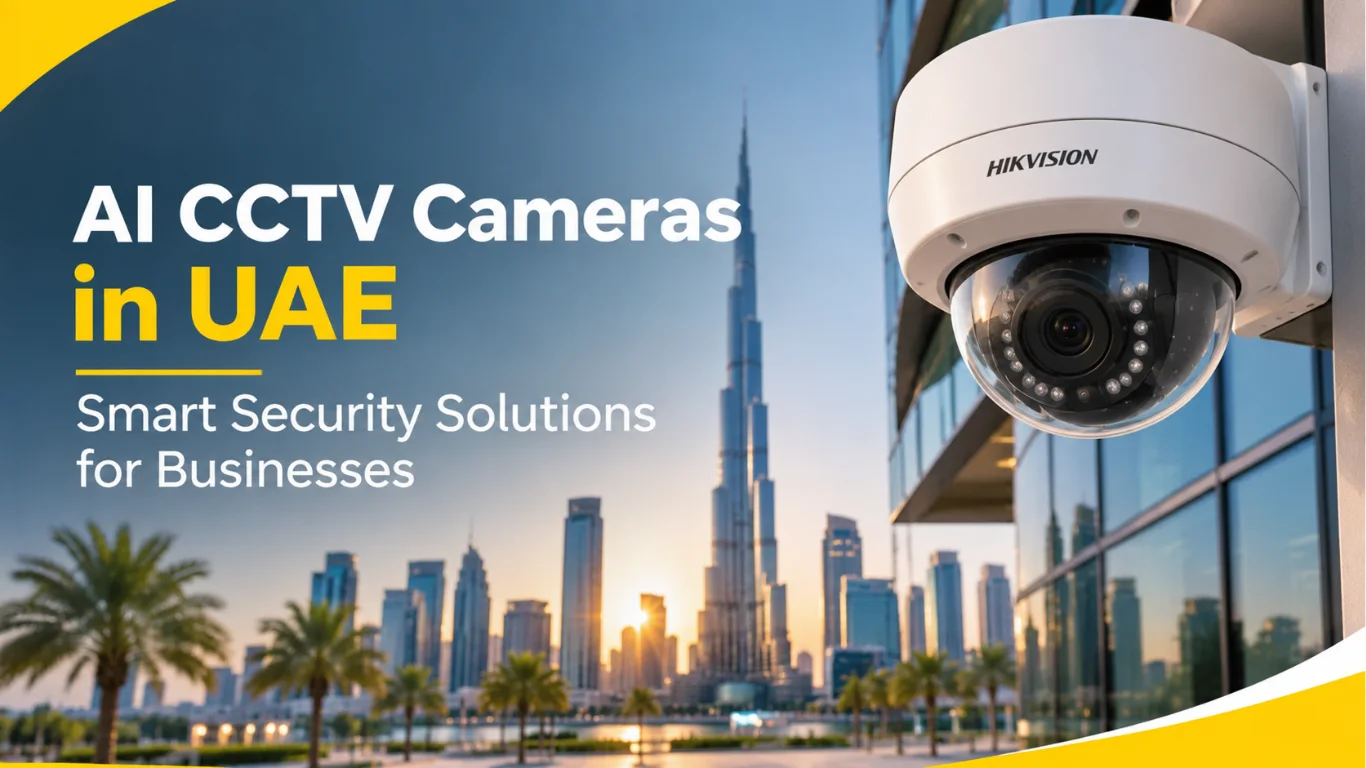
AI CCTV Cameras in UAE: Smart Security Solutions for Businesses
Nov
A security camera is useful only when it helps you understand what is happening around your property. For many years, businesses have relied on CCTV systems to record activities and review footage whenever an incident occurs. However, traditional surveillance often requires someone to monitor camera feeds continuously or spend hours searching through recordings to find a particular event. (AI CCTV Cameras in UAE)
This is where Artificial Intelligence (AI) is making a difference.
Modern AI CCTV cameras do more than capture video. Depending on their capabilities, they can identify people and vehicles, recognise specific movements, detect intrusion events and send alerts when something unusual happens. Instead of treating every movement as a potential security threat, intelligent surveillance systems can focus on events that matter.
For businesses in Dubai, Sharjah, Abu Dhabi and across the UAE, this technology offers a more practical approach to monitoring offices, warehouses, retail stores and industrial facilities.
Let’s look at how AI CCTV cameras actually work, which features matter for businesses and what to consider before investing in an intelligent surveillance system.
What Makes an AI CCTV Camera Different from a Regular Security Camera?

The main difference between a conventional CCTV camera and an AI-enabled camera is how the recorded information is processed.
A traditional camera captures video and sends it to a DVR or NVR for recording. Basic motion detection may trigger an alert whenever there is a change in the image. The problem is that not every movement represents a security incident. Moving trees, passing vehicles, animals and changing light conditions can all trigger unnecessary notifications.
An AI-enabled camera with suitable analytics can examine the scene and classify certain objects, such as people and vehicles. It can also be configured to identify specific events, depending on the technology supported by the camera or recording device.
Consider a warehouse that remains closed overnight. If a traditional motion detector identifies movement outside the building, it may generate an alert. However, a compatible AI surveillance system can distinguish between a person entering a restricted area and other movements that do not require the same level of attention.
This makes intelligent detection particularly useful for businesses that need to monitor large premises without relying entirely on manual observation.
Important AI Features Businesses Should Understand
Not every camera advertised as an AI CCTV camera offers the same functionality. Some models provide basic human and vehicle classification, while advanced systems support additional analytics. Before choosing a camera, it is important to understand what each feature actually does.
Human and Vehicle Detection
Human and vehicle detection is one of the most useful AI features for everyday business security.
Compatible cameras use deep-learning algorithms to distinguish people and vehicles from other moving objects. This helps reduce unnecessary motion alerts and allows security personnel to focus on relevant events.
For example, a company can configure its surveillance system to notify security staff when a person enters a restricted warehouse area after working hours. Similarly, vehicle detection can help monitor loading bays, parking spaces and entrance gates.
Hikvision AcuSense technology is a practical example. It uses deep-learning-based target classification to distinguish humans and vehicles from other objects, helping improve alarm accuracy on supported devices.
Intrusion Detection and Perimeter Protection
For warehouses, factories and commercial properties, protecting the perimeter is often just as important as monitoring the main entrance.
Intrusion detection allows a compatible camera to identify activity within a predefined area. Businesses can configure virtual boundaries around restricted spaces and receive alerts when a relevant event occurs.
For example, a warehouse can use intrusion detection to monitor a storage area that should remain empty outside operating hours. If a person enters that area, the system can generate an alert for the security team.
The availability and accuracy of this feature depend on camera capabilities, installation conditions and configuration.
AI Video Analytics and People Counting
AI video analytics can help businesses get more value from surveillance footage.
Depending on the system, analytics can include people counting, vehicle classification, loitering detection, occupancy monitoring and other event-based functions.
Retail stores, for instance, may use people-counting technology to understand how many customers enter their premises during different periods. Shopping centres and commercial facilities may also use occupancy information to support operational planning.
These features are not available on every AI CCTV camera, so businesses should check the supported analytics before purchasing equipment.
Facial Recognition and Face Comparison
Some advanced surveillance systems offer facial recognition or face comparison capabilities.
These technologies can compare captured faces against authorised image databases and help identify registered individuals. They may be useful in specific controlled environments where identity verification is required.
However, facial recognition should not be confused with ordinary human detection. A camera that can identify a person as a human does not necessarily have the ability to recognise that person’s identity.
Businesses considering this feature should verify hardware and software compatibility and review applicable privacy and data protection requirements.
Real-Time Alerts and Smart Notifications
A security system should not simply record incidents; it should also help the right people become aware of them.
Compatible AI cameras and recording systems can send notifications when configured events occur. Depending on the solution, alerts may relate to intrusion, human or vehicle detection, camera tampering or other security conditions.
This can be particularly useful for businesses with multiple entrances or locations, where continuously monitoring every camera feed is not practical.
Why Are Businesses in UAE Considering AI CCTV Systems?
Businesses across the UAE operate in different environments, from small retail outlets and office buildings to large warehouses and industrial facilities. Each location has its own security requirements.
AI surveillance can help address some of these requirements more effectively

Better Monitoring of Large Premises
A warehouse or factory may have several entrances, loading areas and restricted zones. Intelligent detection helps security teams focus on important events rather than reviewing every movement manually.
Fewer Unnecessary Notifications
When a system can distinguish between humans, vehicles and other objects, it can reduce alerts caused by irrelevant movement. This makes notifications more useful for security personnel.
Faster Investigation of Incidents
Finding a particular event in hours of recorded footage can be time-consuming. Compatible intelligent recording systems can organise footage according to detected people, vehicles or events, making searches easier.
Improved Operational Awareness
Features such as people counting and vehicle monitoring can provide useful information beyond conventional security recording. Businesses can use these insights to understand activity within selected areas.
More Flexible Security Management
Businesses can choose different camera types and analytics according to their premises. A small office may need entrance monitoring, while a large industrial facility may require perimeter protection and several types of intelligent detection.
Where Can AI CCTV Cameras Be Used?
The usefulness of an AI CCTV system depends on where it is installed and what the business needs to monitor.
Offices and Corporate Buildings
Office buildings can use intelligent surveillance to monitor reception areas, entrances, parking facilities and restricted departments. Human detection and intrusion alerts can help security teams keep track of activity outside normal working hours.
Retail Stores and Shopping Centres
Retail businesses can use suitable video analytics for entrance monitoring and people counting. These features can help management understand customer traffic while supporting security monitoring across the premises.
Warehouses and Industrial Facilities
Warehouses often contain valuable inventory, loading bays and areas that should only be accessed by authorised personnel.
Cameras with human and vehicle detection, intrusion detection and suitable perimeter analytics can help security teams monitor these locations more effectively.
Hotels and Commercial Properties
Hotels and commercial buildings need to monitor entrances, parking areas, corridors and shared spaces. A properly planned surveillance system can provide visibility across these areas while respecting the privacy of employees, visitors and customers.
AI CCTV Cameras vs Traditional CCTV Cameras: What Is the Difference?
The choice between traditional and AI-enabled CCTV depends on the level of monitoring a business requires.
| Feature | Traditional CCTV | AI CCTV |
| Video recording | Yes | Yes |
| Basic motion detection | Common | Common |
| Human and vehicle classification | Limited or model-dependent | Available on supported models |
| Intrusion analytics | Model-dependent | Available on supported systems |
| People counting | Requires compatible analytics | Available on selected systems |
| Intelligent video search | Limited | Available on compatible systems |
| Automated event notifications | Model-dependent | Available on supported systems |
Traditional CCTV is still a suitable option when a business mainly needs video recording and basic monitoring. AI CCTV becomes more useful when the requirement includes intelligent detection, event classification and advanced video analytics.
The important thing is to select technology based on actual security needs rather than paying for features that the business will never use.
Can You Upgrade an Existing CCTV System with AI?
This is a common question for businesses that already have CCTV cameras installed.
In some cases, an existing surveillance system can support additional intelligent features without replacing every camera. Compatible NVRs, AI-enabled recording devices or analytics software may provide an upgrade path.
However, compatibility should never be assumed.
Before recommending an upgrade, a technical assessment should consider the existing camera models, DVR or NVR capabilities, network bandwidth, storage capacity and supported analytics.
For example, some Hikvision AcuSense NVR solutions can add human and vehicle classification to compatible conventional cameras. This does not mean that every existing camera or recorder can support every AI feature.
A proper equipment assessment helps businesses avoid unnecessary replacements and choose an upgrade that works with their existing infrastructure.
How to Choose the Right AI CCTV Camera for Your Business
Choosing an AI CCTV camera should begin with the security problem you want to solve, not simply the camera’s price or resolution.
Start by identifying the areas that require monitoring. An entrance, warehouse, parking area and outdoor perimeter may all need different camera types and viewing angles.
Next, check the analytics capabilities. If your main requirement is identifying people and vehicles, look for a model that explicitly supports these functions. If you need facial recognition, people counting or licence plate recognition, confirm that the exact camera and recording system support those features.
Other important considerations include:
- Camera resolution: Choose an appropriate resolution based on the level of image detail required.
- Field of view: Check whether the camera can cover the required area without leaving important blind spots.
- Night vision: Review infrared or low-light performance for locations that need monitoring after dark.
- Weather protection: Outdoor cameras should have suitable protection against dust, rain and environmental conditions.
- Recording and storage: Select a compatible NVR and sufficient storage for the required recording period.
- Network compatibility: Check bandwidth, connectivity and remote monitoring requirements.
- System integration: Make sure the cameras work with the existing recording and management infrastructure.
Businesses operating in the UAE should also confirm the applicable CCTV installation, privacy and data-handling requirements with the relevant authorities before deployment.
Explore CCTV Cameras at Cost to Cost Trading Co. LLC
Finding the right CCTV equipment requires more than selecting a camera with a high resolution or an attractive price. The camera must suit the location, recording setup and actual monitoring requirements.
Cost to Cost Trading Co. LLC offers CCTV cameras and security products from recognised brands, including Hikvision and CP Plus. Its product range includes dome cameras, bullet cameras, network cameras and other surveillance equipment for different applications.
Businesses can explore the CCTV Cameras and Security Surveillance Systems in UAE category to review available models, compare specifications and identify suitable equipment.
CTC’s CCTV range includes different camera designs and specifications for indoor and outdoor monitoring. Customers can consider their coverage requirements, budget and preferred features when selecting equipment.
For businesses planning a new installation or upgrading an existing setup, choosing compatible cameras and recording devices is essential for reliable long-term performance.
Frequently Asked Questions
The main advantage is its ability to analyse video and identify specific objects or configured events. This can help security teams focus on relevant activity instead of reviewing every movement manually.
Compatible AI cameras can reduce false alerts by distinguishing humans and vehicles from other moving objects. However, performance depends on the camera model, installation environment and configuration.
No. AI capabilities are available on selected Hikvision cameras and recording devices. Features such as AcuSense should be verified against the exact model specifications.
Yes. Cameras with suitable infrared or low-light imaging can monitor areas at night. The effectiveness of AI analytics also depends on image quality, lighting conditions and supported features.
Yes. Selected systems support features such as human and vehicle detection, intrusion alerts and perimeter monitoring, which can be useful for warehouse security.
Yes. Small businesses can consider AI-enabled cameras for entrances, offices, shops and parking areas. The system should match their security requirements and available budget.
Conclusion
AI CCTV technology is not simply about installing cameras with more advanced specifications. Its real value comes from how effectively it helps businesses identify relevant events, investigate incidents and manage their premises.
For a warehouse, this may mean detecting movement in a restricted area. For a retail store, it could involve understanding customer traffic. For an office, it may mean receiving an alert when someone enters a designated area outside working hours.
Businesses in Dubai and across the UAE should therefore focus on choosing cameras with the right analytics, recording compatibility and coverage for their specific requirements.
Explore the CCTV range at Cost to Cost Trading Co. LLC to compare available surveillance products and find suitable equipment for your business. Contact the team to discuss your requirements and make a more informed CCTV purchasing decision.