


























































IP Phone
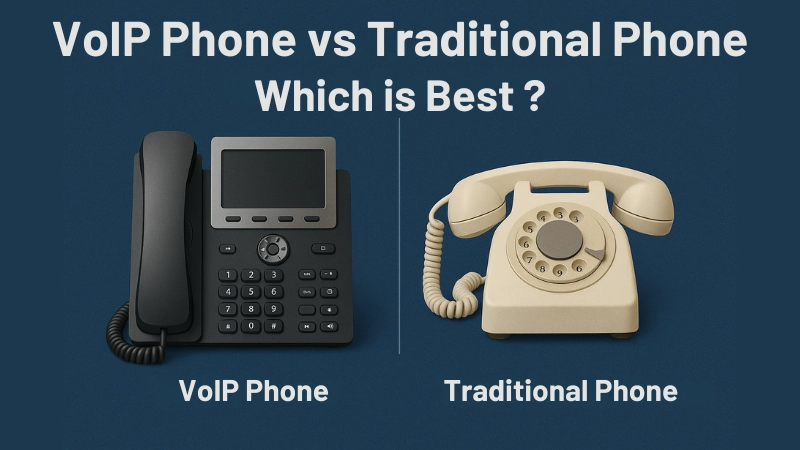
VoIP Phone vs Traditional Phone: Which is Best ?
Aug
In 2025, the way we communicate—both at home and in the workplace—has transformed dramatically. With the rise of digital communication and hybrid workforces, many are asking the pivotal question: VoIP Phone vs Traditional Phone — which is the smarter choice today?
As businesses and households move away from outdated analog systems, Voice over Internet Protocol (VoIP) has gained tremendous traction. If you’ve ever wondered, “What is VoIP phone technology, and why is it replacing landlines?”, this guide is for you.
In this article, we’ll compare these two communication technologies in terms of cost, features, reliability, and convenience. Whether you’re evaluating IP phones in Dubai for small business, exploring Cisco IP phones for enterprise use, or looking for a VoIP phone system for home, we’ll help you make an informed decision in 2025.
What is a VoIP Phone and How Does It Work?

A VoIP phone is a device that allows users to make voice calls using an internet connection instead of a traditional public switched telephone network (PSTN). Unlike analog phones that use copper wiring, VoIP phones convert your voice into digital signals and transmit them over the internet.
There are several types of VoIP phones available today, including:
- Hardware VoIP phones (like the Yealink IP phone or Cisco VoIP phones),
- Softphones (apps installed on computers or smartphones),
- And hybrid systems that integrate with traditional lines.
Here’s how a VoIP phone works in simple terms:
- You speak into the phone.
- The VoIP system converts your voice into data.
- It sends that data over the internet.
- The receiver’s phone converts it back into sound.
This seamless process happens in milliseconds, allowing for real-time conversations, whether you’re using a Cisco IP Phone in Dubai a corporate office or a VoIP phone system for home use.
What is a Traditional Landline Phone System?

Traditional landline systems rely on analog signals sent through physical copper lines installed by telephone companies. These systems have been in use for decades and were once considered the gold standard for reliability and call clarity.
While landlines still function during internet outages and don’t rely on electricity (as many draw power from the phone line itself), they come with a host of limitations in 2025:
- No advanced features like voicemail-to-email or call analytics.
- Expensive long-distance and international rates.
- Costly hardware and infrastructure requirements.
Landlines are gradually being phased out as telecom providers shift toward digital infrastructure. Even major enterprises that once relied heavily on traditional systems are now switching to VoIP business phone providers for greater flexibility and lower operational costs.
Key Differences Between VoIP and Traditional Phones
Below is a breakdown of the most important distinctions:
| Feature | VoIP Phone | Traditional Phone |
| Connection Type | Internet-based | Analog landline (PSTN) |
| Mobility | Highly mobile, remote-friendly | Fixed, location-bound |
| Cost | Lower monthly cost, especially for long-distance | Higher monthly fees, costly international calls |
| Scalability | Easily scalable with cloud-based services | Limited by hardware and line availability |
| Features | Voicemail-to-email, call forwarding, video calls, analytics | Basic call functionality |
| Best For | Small businesses, remote teams, modern households | Legacy users, areas with unreliable internet |
Whether you’re selecting a Yealink IP phone for your growing team or setting up a VoIP phone system for home, the differences in functionality and cost are hard to ignore.
Pros and Cons of VoIP Phones in 2025
Pros of VoIP Phones
- Cost Savings:- VoIP solutions typically come with significantly lower costs than traditional phones. Businesses using VoIP business phone providers enjoy reduced long-distance fees, no hardware dependency, and affordable subscription-based pricing.
- Flexibility & Mobility:- VoIP phones allow users to make and receive calls from virtually anywhere. Whether it’s a remote employee using a softphone or a manager answering calls on a Cisco VoIP phone, mobility is a core advantage.
- Advanced Features:- From auto-attendants and voicemail transcription to call analytics and video conferencing, VoIP systems offer enterprise-grade functionality—even for startups using VoIP phones for small business.
- Easy Integration:- VoIP systems can integrate with CRM platforms, helpdesks, and project management tools, streamlining workflows across departments.
- Scalability:- Adding users or lines is easy with VoIP. No need for rewiring or physical installations—just activate a new account or connect a device like a Cisco IP phone or Yealink IP phone.
Cons of VoIP Phones
Internet Dependency
VoIP requires a stable internet connection. In areas with spotty service, call quality may suffer.
- Power Outages:- Unlike landlines, VoIP systems depend on electricity. Unless you have a backup power source, phone service may be unavailable during outages.
- Security Risks:- VoIP calls can be vulnerable to hacking or eavesdropping without proper encryption and security protocols.
- Latency & Jitter:- Although rare with modern broadband, poor internet connections can result in call delays or dropped audio.
Pros and Cons of Traditional Landline Phones
While traditional landline phones are no longer the default option for businesses or homes, they still have a few merits—especially for users in rural areas or those concerned with power and internet stability.
Pros of Landline Phones
- Consistent Call Quality:– Landlines typically deliver stable, interference-free audio quality—particularly in areas where internet infrastructure is poor or unreliable.
- Function During Power Outages:- Because most analog phone systems draw power from the telephone line itself, they remain operational during blackouts—a significant advantage in emergency scenarios.
- Simple to Use:- For users who prefer minimal tech complexity, landlines offer plug-and-play simplicity without the need for routers, software, or digital interfaces.
Cons of Landline Phones
- High Operational Costs:- Landline services often come with expensive monthly fees and inflated long-distance or international calling rates—especially when compared to services from VoIP business phone providers.
- Lack of Features:- Traditional systems don’t offer modern functionalities like call forwarding, voicemail-to-email, or app-based controls—all of which are standard with a VoIP phone.
- Not Scalable:- Scaling a landline system requires physical infrastructure upgrades—wiring, switchboards, and new equipment—making it costly and time-consuming for growing businesses.
- Declining Support:- As telcos shift away from analog technology, support and maintenance for traditional lines are becoming limited and more expensive.
Which Phone System is Better for Business?

When it comes to choosing the best phone solution for your needs, it’s essential to consider how you communicate daily and what features matter most to you or your organization.
For Small Businesses
VoIP phones for small business users offer incredible value. These systems provide features like automated attendants, mobile apps, and video conferencing—at a fraction of the cost of traditional lines. Devices such as the Yealink IP phone in Dubai or entry-level Cisco IP phone in Dubai models are ideal for lean teams that want enterprise-level functionality without the complexity.
For Enterprises
Large organizations with complex communication needs often rely on hardware-based systems like Cisco VoIP phones, which offer advanced integrations, multi-line setups, and enhanced security features. With the right VoIP business phone provider, these solutions scale effortlessly with business growth.
For Home Users
Even residential users are shifting to digital systems. A VoIP phone system for home is perfect for remote workers, digital nomads, or families looking to cut costs while maintaining call reliability. Many providers offer home-specific packages that include call blocking, voicemail, and multiple virtual numbers.
Final Verdict: VoIP or Landline – What Should You Choose?
In 2025, VoIP phones have clearly outpaced traditional landlines in terms of features, cost-efficiency, and flexibility. Whether you’re a solopreneur, a growing business, or just looking for a smart VoIP phone system for home, the advantages of VoIP far outweigh the legacy benefits of analog lines.
For businesses, modern VoIP solutions—backed by trusted VoIP business phone providers—offer scalability, security, and integration potential that landlines simply can’t match.
For home users, VoIP presents a cost-effective, mobile-friendly alternative that doesn’t sacrifice reliability or performance.
Ultimately, while landlines may still have a place in specific use cases, VoIP is the smarter, future-ready choice.
Ready to upgrade your phone system?
Explore our wide range of IP phones at Cost to Cost or
Shop trusted IP phones here to find the right VoIP solution for your needs.
Professional telecom system solutions in Dubai enable organizations to deploy scalable communication networks, integrating IP telephony, video conferencing, and data services for efficient, secure, and uninterrupted business operations.
Frequently Asked Questions
A VoIP phone uses the internet to transmit calls, while a landline relies on analog cables. VoIP offers more features and lower costs, especially for long-distance calls.
Yes—when configured properly. Leading VoIP business phone providers now include end-to-end encryption, VPN support, and two-factor authentication.
Absolutely. Many households are replacing their landlines with a VoIP phone system for home, allowing for lower bills and added features like call screening and mobile integration.
Popular options include Cisco VoIP phones for enterprise needs and Yealink IP phones for small businesses due to their affordability and ease of use.
While you can use dedicated devices like Cisco IP phones, many users opt for softphones or headsets connected to their laptops or smartphones.